Currently Empty: $0.00
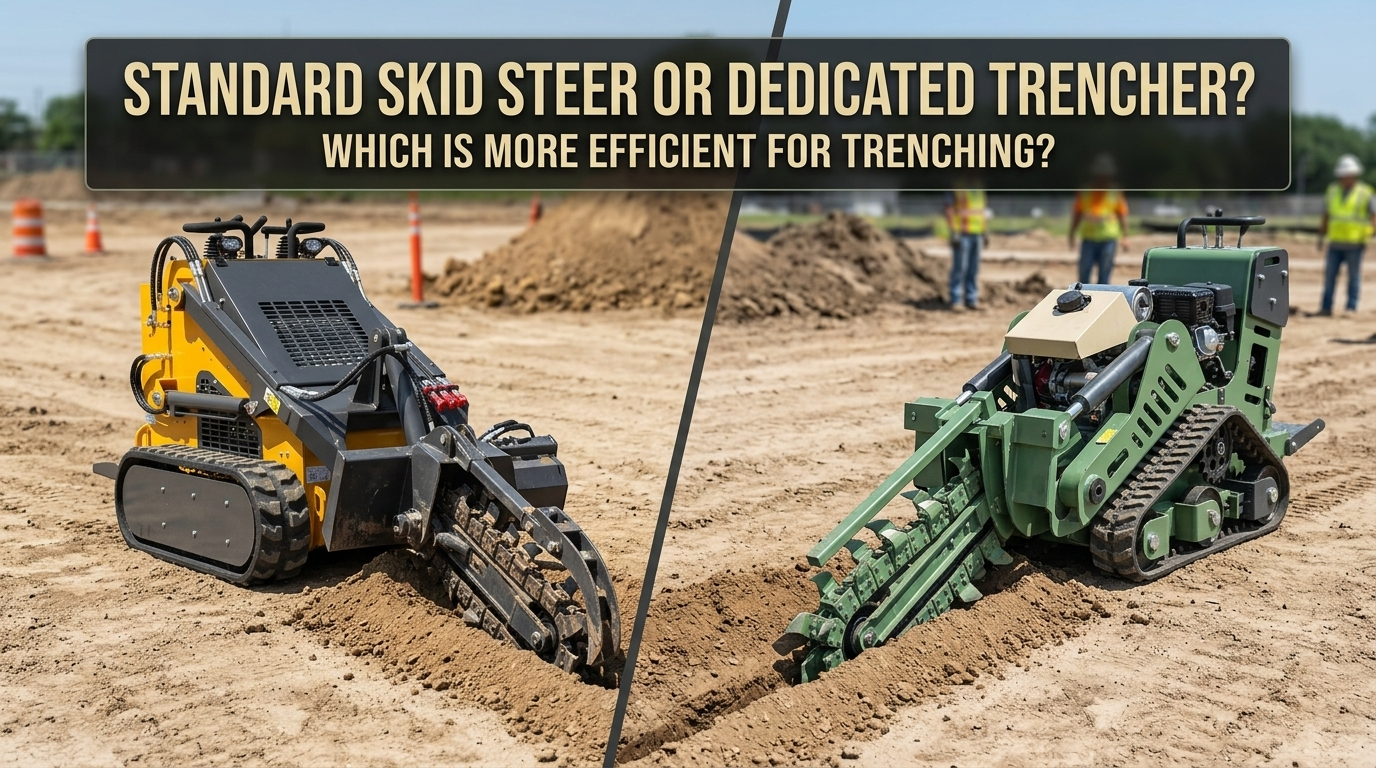
Standard Skid Steer or Dedicated Trencher: Which Is More Efficient for Trenching?
Picking the right machine for trenching work is a decision that shapes your pace, your costs, and the quality of every trench you cut. Two options usually come down to the shortlist: a standard skid steer running a trencher attachment, or a dedicated trencher engineered purely for the task. Both cut trenches capably, yet they behave differently in cutting performance, setup, maneuverability, and how they fit the rest of your workload. Knowing where each excels helps you choose with confidence.
This guide compares a standard skid steer and a dedicated trencher across five practical areas. You will see how each handles trenching performance and cutting efficiency, how they differ in setup time and attachment requirements, how they maneuver in tight spaces, how they perform across varied trenching jobs, and how their versatility beyond trenching influences the decision. By the end, you will have a clear basis for choosing the machine that suits your work.
Trenching Performance and Cutting Efficiency
A dedicated trencher is designed specifically for trenching, while a standard skid steer relies on a separate trencher attachment, and that basic difference drives how each machine cuts into the ground. A dedicated trencher is engineered around the cutting task, with its power delivery, chain, and overall design pulling in one direction. A standard skid steer is a flexible platform that runs a trenching attachment through its hydraulic system, so its cutting performance depends on how well the attachment and the host machine are matched to each other.
Cutting speed is often where the two setups separate most clearly. A purpose-built trencher can channel power efficiently to the cutting chain, holding a steady, productive pace through the soil. A skid steer paired with a well-matched attachment cuts effectively too, but its results hinge on delivering adequate hydraulic flow and pressure to the attachment. When that pairing is right, the skid steer trenches well. When the attachment asks for more than the machine comfortably supplies, the cut slows.
Trench consistency and behavior in tough ground complete the comparison:
- Cutting speed, where a dedicated trencher’s focused design tends to sustain a steady pace, while a skid steer depends on a suitable attachment and hydraulic match.
- Trench consistency, since a machine built for trenching generally holds a controlled width and depth, though a well-configured skid steer can also produce uniform trenches
- Demanding ground conditions, where harder or rockier material tests both setups, and the machine with the power and stability to hold the cut proves more dependable
For work where trenching quality and pace sit at the center, compare how each setup handles these factors against the ground you cut most often.
Setup Time and Attachment Requirements
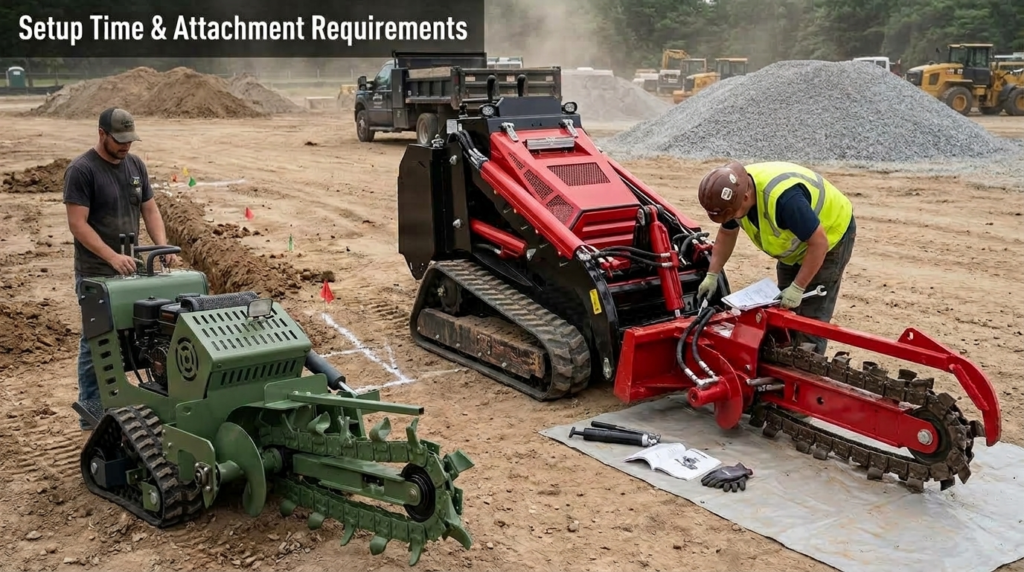
A standard skid steer may require attachment installation, hydraulic connections, and setup before trenching begins, and this preparation adds a step to every job that a dedicated machine skips. Fitting a trencher attachment means mounting it to the machine, connecting the hydraulic lines that power the cutting chain, and confirming everything is secure and correctly configured before the first cut. On its own that is manageable, but it takes time, and that time returns each time the attachment goes on or comes off.
A dedicated trencher is purpose-built for the task, which reduces the need to switch between equipment configurations. Because the trenching system is integrated into the machine, there is no attachment to fit or remove. The machine shows up ready to cut, and the operator moves from arriving on site to trenching with fewer steps in between. For crews that trench often, that readiness clears away a recurring source of delay.
How much setup time matters depends heavily on the workflow:
- Trenching-only projects, where a skid steer can stay configured for the task, so setup happens once and the gap between the two options narrows
- Mixed-task days, where the machine switches between trenching and other work repeatedly, and the time spent changing attachments and reconnecting hydraulics adds up across the job
- Frequent reconfiguration, where each swap pulls the machine away from productive work and stacks up handling a dedicated trencher never needs
Weighing this factor means looking honestly at your routine. A skid steer’s flexibility can justify the setup steps when the machine handles varied work, while a dedicated trencher’s streamlined readiness pays off when trenching is the main activity throughout the day.
Maneuverability in Tight Work Areas
Both machines can be useful in confined spaces, but their dimensions, steering systems, and overall design affect how easily they position themselves along a trench line. Trenching regularly happens in tight quarters, whether beside buildings, within residential lots, or through narrow passages, and how a machine moves in those conditions influences both the pace and the accuracy of the work. A machine that positions itself easily follows the trench route cleanly, while one that struggles to maneuver slows the operation and complicates the cut.
Dimensions carry real weight here. A machine’s width decides whether it can pass through gateways, slip between obstacles, and reach the spots where the trench belongs, while its overall size sets how much room it needs to work comfortably. Steering systems count too, since the way a machine turns and repositions shapes how faithfully it can track a trench line in a confined area. Some designs pivot tightly and shift position with little space, while others need more room to move.
Before choosing between the two, several site factors deserve careful thought:
- Access width, meaning whether the machine can physically reach the work area through the available openings
- Turning space, or how much room the machine needs to reposition and line up with the trench
- Site layout, including the obstacles, boundaries, and features that dictate how a machine must move
Considering these together against the sites you work on most leads to a sound choice. Rather than assuming either setup is inherently more nimble, compare the actual dimensions and steering characteristics of the machines you are weighing against the real conditions of your jobsites. That practical comparison reveals which machine will move most easily where your trenching work happens.
Productivity Across Different Trenching Jobs
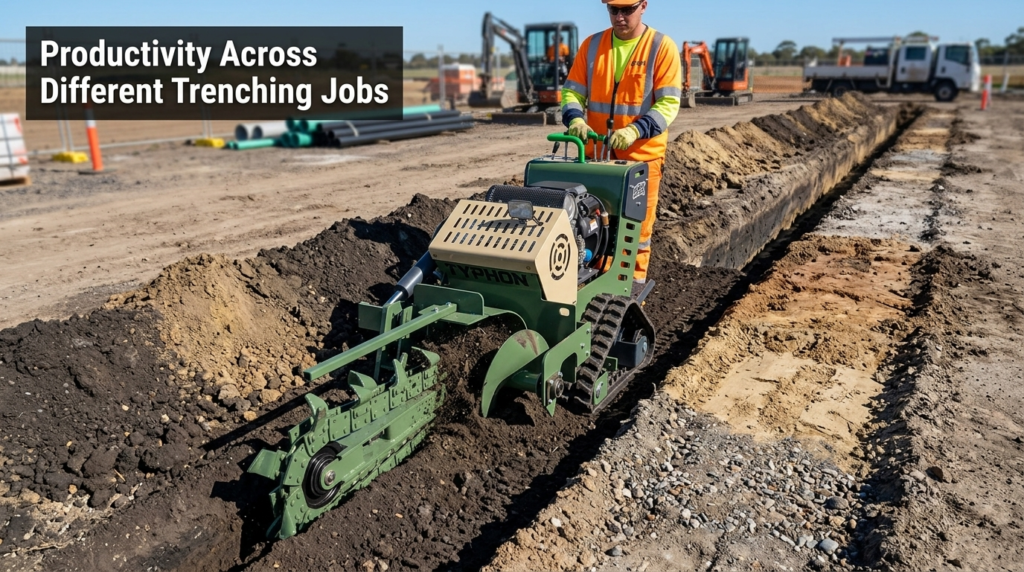
Trenching efficiency rests on more than the machine itself. It depends on factors such as soil conditions, trench depth and width, travel speed, and how frequently the machine needs to perform tasks beyond trenching. Because these factors shift from job to job, the most productive choice often follows the specific nature of the work rather than a single measure of capability. A machine that shines on one type of project may prove less efficient on another with different demands.
Soil conditions strongly shape productivity. Soft, workable ground lets either setup cut quickly, while harder, denser, or rockier material places greater demands on the machine and can slow the pace considerably. Trench depth and width matter as well, since deeper or wider trenches call for more power and time to finish. Travel speed governs how efficiently the machine advances along the trench line, and a steady, controlled pace supports both throughput and trench quality across a run.
The makeup of the workload is often the deciding factor. A dedicated trencher may be better suited to projects where trenching makes up most of the work, since the machine stays focused and delivers consistent performance across long runs without interruption. When trenching dominates the schedule, that focus turns directly into productivity.
A standard skid steer can be the stronger overall choice when trenching is one task among several. If the machine also loads, grades, or handles material throughout the day, the ability to trench when needed and then shift to other work keeps the whole operation moving, even where pure trenching pace differs. Assessing your soil, your trench specifications, and how central trenching is to the project helps you identify which machine delivers the productivity your work demands.
Versatility Beyond Trenching
A standard skid steer can use multiple attachments for loading, grading, digging, and material handling, while a dedicated trencher is built around trenching operations. This difference in versatility is often the most important part of the decision, because it determines whether the machine serves a single specialized purpose or a broad range of tasks across your projects. Understanding how each fits your work helps you choose equipment that earns its keep.
A skid steer’s strength is adaptability. With the right attachments, the same machine can dig a trench in the morning, load material at midday, and grade a surface in the afternoon. That flexibility makes it a valuable all-rounder for operations handling varied work, since one machine covers many needs rather than requiring separate equipment for each. For contractors whose projects mix tasks, this range keeps the machine busy and productive across the whole job.
A dedicated trencher takes the opposite path, concentrating entirely on trenching. That focus is exactly what makes it appealing where trenching is the primary activity. Instead of adapting a general machine to the task, a dedicated trencher offers a purpose-built tool that stays ready to cut consistent trenches without the complications of managing attachments.
The right choice depends on whether your project calls for one specialized task or a wider spread of applications. If trenching is central and constant, a dedicated trencher provides focused efficiency. If your work spans loading, grading, digging, and material handling alongside trenching, a standard skid steer offers the versatility to handle it all with one machine. Look honestly at the full scope of your work, weigh how much of it is trenching against everything else, and let that balance guide your decision.
Conclusion
Choosing between a standard skid steer and a dedicated trencher comes down to how trenching fits into your work. A dedicated trencher delivers focused cutting performance, streamlined readiness without attachment setup, and steady productivity on projects where trenching dominates. A standard skid steer brings versatility, handling trenching alongside loading, grading, and material handling, which makes it a strong pick when your work spans many tasks. Maneuverability and productivity both hinge on matching the machine’s dimensions, steering, and capabilities to your soil conditions, trench specifications, and site layout.
Before you decide, take an honest look at your projects. Weigh how much of your work is trenching, the ground you cut through, the spaces you operate in, and whether you need one machine to cover varied tasks. When you measure these factors against what each setup offers, you gain a clear, dependable basis for choosing equipment that keeps your trenching efficient and your projects moving from the first cut to the finished trench.
Frequently Asked Questions
1. Which cuts trenches faster, a dedicated trencher or a skid steer with an attachment?
A dedicated trencher often holds an edge in cutting speed because it is engineered around the trenching task, with its power delivery, chain, and machine design all pulling toward that single purpose. This focus lets it channel power efficiently to the cutting chain and move through material at a steady, productive pace. A standard skid steer fitted with a trencher attachment can also cut effectively, but its performance depends on how well the attachment matches the host machine. The skid steer drives the attachment through its hydraulic system, so cutting speed hinges on supplying adequate hydraulic flow and pressure. When that match is right, the skid steer trenches well. When the attachment demands more than the machine comfortably provides, the cut slows. The honest answer is that speed depends on the specific machines, how well they are matched, and the ground you are cutting. Comparing the cutting performance of the setups you are weighing against your typical soil conditions gives the clearest picture of which will trench faster for your work.
2. Does a skid steer take much longer to set up for trenching?
A standard skid steer does require some setup before trenching, since the trencher attachment must be mounted, the hydraulic lines connected, and everything confirmed as secure and properly configured before work begins. On its own this is manageable, but it takes time, and that time repeats each time the attachment goes on or comes off. A dedicated trencher avoids this entirely because its trenching system is integrated into the machine, so it arrives ready to cut with no attachment to fit or remove. How much this matters depends on your workflow. If the skid steer stays configured for trenching throughout a project, the setup happens once and the difference narrows considerably. But if the machine must switch between trenching and other tasks repeatedly, the time spent changing attachments and reconnecting hydraulics accumulates across the job, pulling the machine away from productive work. Looking honestly at how often you expect to reconfigure the machine helps you judge whether setup time is a minor consideration or a recurring source of delay for your operation.
3. Which machine handles tight, confined spaces better?
Both machines can work in confined spaces, so the better choice depends on the specific dimensions, steering systems, and design of the machines you compare against your actual sites. A machine’s width determines whether it can fit through gateways and between obstacles to reach the trench, while its overall size affects how much room it needs to work comfortably. Steering systems matter too, since how a machine turns and repositions shapes how well it follows a trench line in a tight area. Some designs pivot tightly and adjust position with little space, while others need more room. Rather than assuming either setup is inherently more maneuverable, weigh three site factors before choosing: access width, meaning whether the machine can physically reach the work area; turning space, or how much room it needs to reposition and align with the trench; and site layout, including the obstacles and boundaries that shape how the machine must move. Comparing the real dimensions and steering characteristics of your candidate machines against these conditions reveals which will position itself most easily where your trenching happens.
4. How do soil conditions and trench size affect which machine is more productive?
Soil conditions and trench dimensions strongly influence productivity for both setups. Soft, workable ground lets either machine cut quickly, while harder, denser, or rockier material places greater demands on the machine and can slow the pace considerably. The machine with the power and stability to sustain the cut in tough ground performs more reliably. Trench depth and width matter as well, since deeper or wider trenches require more power and time to complete, and the machine best able to deliver that power steadily will be more efficient. Travel speed also shapes productivity, since a steady, controlled advance along the trench line supports both pace and trench quality. Because these factors vary from job to job, the most productive choice often depends on the nature of the specific work rather than a single measure of capability. Assessing your typical soil, the trench specifications your projects call for, and the pace your work requires helps you judge which machine will deliver the productivity you need across the range of conditions you regularly face.
5. Should I choose a dedicated trencher if I also need to do other work?
If your work involves more than trenching, a standard skid steer is often the more practical choice because of its versatility. With the right attachments, the same skid steer can dig a trench, load material, grade a surface, and handle other tasks, all with one machine. This adaptability keeps the machine busy across varied work and can make the whole operation more efficient, even if its pure trenching pace differs from a dedicated unit. A dedicated trencher, by contrast, concentrates entirely on trenching, which makes it ideal when trenching is the primary activity but less suited to projects that demand a broader range of tasks. The right decision comes down to whether your project requires one specialized task or many. If trenching is central and constant, a dedicated trencher offers focused efficiency and streamlined readiness. If your work spans loading, grading, digging, and material handling alongside trenching, a skid steer lets one machine cover it all. Look honestly at the full scope of your work and let the balance between trenching and everything else guide your choice.